


In Rough Edges, Mike Rothschild writes about fringe groups, conspiracy theories and how the Internet broke our brains. This column is part of TPM Cafe, TPM’s home for opinion and news analysis.
People love a grand conspiracy. The bigger the scheme is, the more people get drawn into it. And the more details and players that are involved, the more believable it seemingly becomes. After all, who would go to the trouble of making up something so complicated? It must be true.
And nobody loves a conspiracy more than President Trump. He and his inner circle especially seem to have fallen in love with what has literally been dubbed “The Grand Conspiracy.” It’s a hopelessly complex, entirely unevidenced theory claiming that a high-ranking group of political figures have been plotting in the shadows for years to stop Donald Trump from making America great again through investigations, indictments and impeachments. It has all the hallmarks of the type of grandiose schemes that Trump supporters especially fall for: countless players, sprawling plots, intricate secrets, and a total lack of evidence that it actually took place.
Despite lacking cogent answers to foundational questions such as “what it is” and “who is doing it,” revenge for the Grand Conspiracy has been a driving force in the administration, prompting an investigation that has trundled along over the last year and a half, involving dozens of officials looking for some reason to indict the president’s enemies.
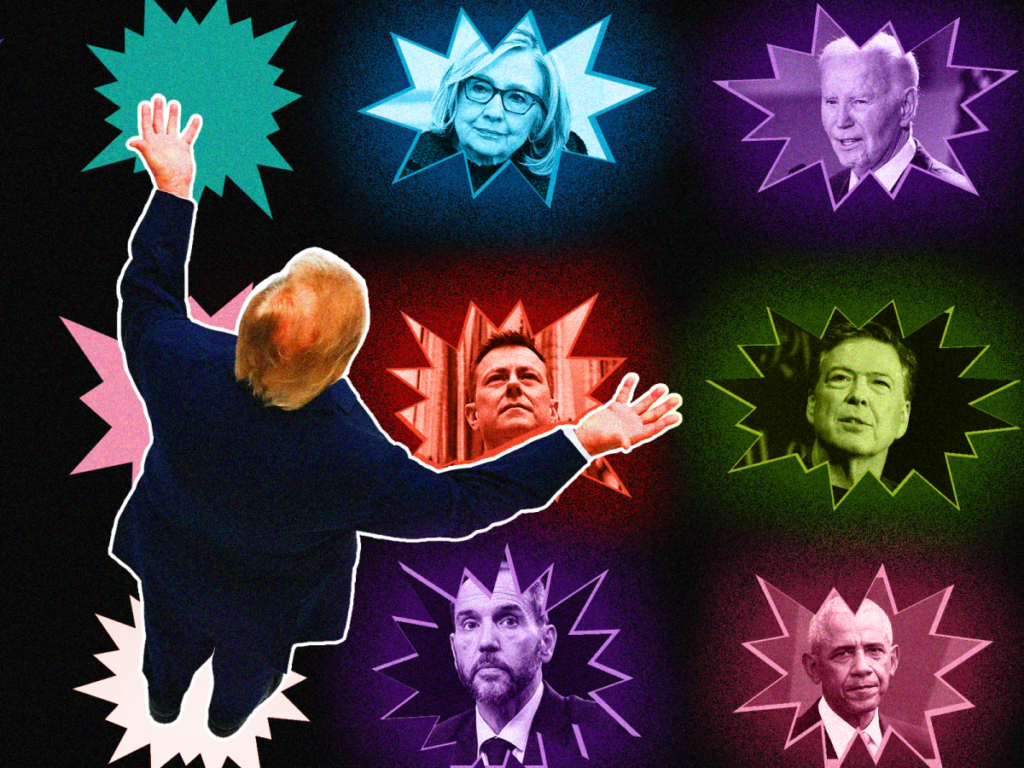
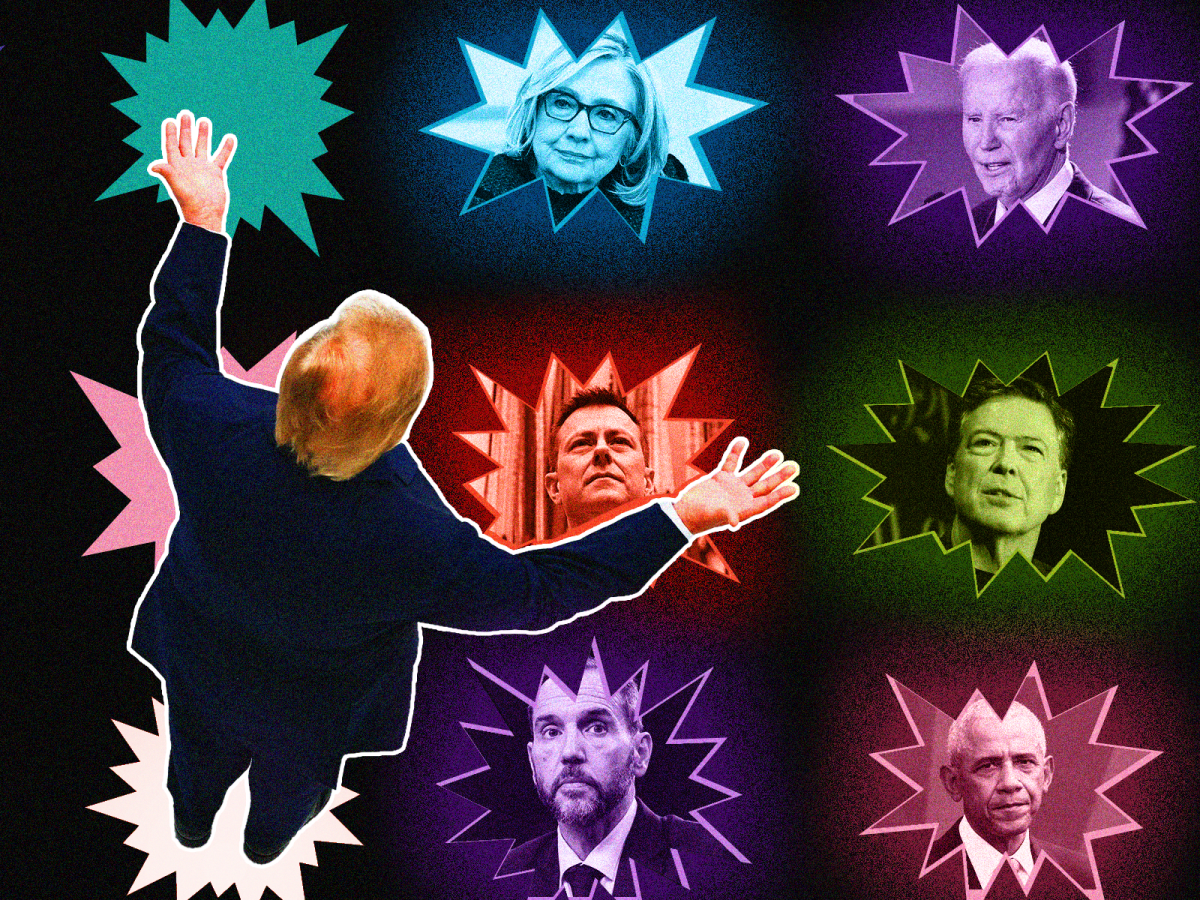
And there are many, many enemies. They include a greatest hits of Trump’s obsessions and grievances, from former special counsel Jack Smith to minor players like former FBI agent Peter Strzok, and even former President Barack Obama himself. According to Grand Conspiracy believers, they are all powerful Deep State figures who supposedly worked together in a single, years-long scheme to destroy Trump and undo the will of the people.
Precisely what these conspirators have actually done remains unclear — even, seemingly, to the prosecutors themselves, who, per the Wall Street Journal, complained to the Justice Department that they weren’t getting much guidance from the local U.S. attorney. The probe is now being run out of Washington, where it continues to baffle those assigned to move it forward.
In the last few weeks, there have been a host of indications that DOJ efforts to prosecute these figures — and tie them all together into one grand scheme — are falling apart. And, as the Grand Conspiracy prosecution flails at DOJ, the claims also aren’t doing much in the court of public opinion, where Republicans are looking for anything they can find to shore up their crumbling midterm prospects.
Trump has, in the past, excelled at turning his personal grievances and enemies into Republican grievances and enemies. But people aren’t especially interested anymore, at least not if one looks at the Republican Party’s numbers in 2026 midterm polling and beyond. Trump voters seem to now be wondering how Trump’s beefs and feuds impact their own lives. They continue to express their disappointment that the president hasn’t curbed inflation, went to war in Iran despite explicit promises of no new wars, and has failed to bring closure to the Jeffrey Epstein debacle.
With the GOP’s midterms prospects looking bleak, Trump’s most loyal influencers are nonetheless leaning into the Grand Conspiracy narrative to present the illusion that everything is going to work out if they just hang on a little longer and vote Republican. Over and over during the past year, everyone from mainstream pundits like Sean Hannity and Dan Bongino to candidates like Mike Lindell and a host of anonymous conspiracy theorists have played up the Grand Conspiracy as the investigation that will finally bring down the Deep State and bring Trump the vindication he has always deserved.
“John Brennan and Jack Smith have some real, major explaining to do, and that they’re probably going to be under some major indictments in the Grand Conspiracy hearing,” declared Benny Johnson in an October interview with Roger Stone where the two traded speculation about the activities of the “seditious cabal” that’s tried to ruin Trump’s life.
“If Jack Smith is not held accountable, you are going to have a very angry base,” conservative writer Julie Kelly declared on Trump stalwart Mark Levin’s radio show a day earlier. “We already saw the Russiagate perps get off. Hopefully, we’ll have some accountability in Florida and the Grand Conspiracy investigation.”
Like so many other past Trump-world conspiracy theories and “investigations that will reveal everything,” Grand Conspiracy believers are setting themselves up not for triumph, but for more disappointment.
What Does the Grand Conspiracy Involve?
Like many conspiracy theories with countless components and players to track, the intricacies of every allegation in the “Grand Conspiracy” are too complicated to cover in full. They are also irrelevant to understanding the greater gist of the theory, because many either don’t exist in a way that can be proven, or are not crimes at all. The more you examine the details, the more you drift away from the bigger picture.
The short version of the supposed scheme involves everyone from Barack Obama and Joe Biden to Hillary Clinton and James Comey. Glimpses of the conspiracy can, its proponents hold, be seen in in countless forms: Jack Smith’s probe into Jan. 6; the Steele Dossier that gave us infamous allegations like the “pee tape”; Trump’s impeachments; the Biden-era Jan. 6 and classified documents indictments; the New York hush money case involving Stormy Daniels; and the numerous FBI probes into Russian interference in 2016 and Trump’s ties to Moscow.
All of the above was done to subvert Trump’s landslide victories, and to take Trump off the board because he was a threat to the Deep State’s control over global politics, the conspiracy theory holds. Despite failing in 2016, the conspiracy plotters continued to make his life miserable while he was in office through impeachments and probes, then they tried to put him in prison after the 2020 election was stolen from him. Even after he won again, the legal warfare and persecution have never stopped.
But now Trump is taking action. The “Grand Conspiracy” investigation is how the investigators will be investigated, and how the persecutors will be persecuted. Running for a time out of the U.S. Attorney’s Office in South Florida, the sprawling probe has involved major Justice Department figures, countless prosecutors and agents, and untold millions of dollars spent running down something that continues to elude basic understanding or evidence, all the while trying to turn it into something that a jury might be able to make heads or tails of. It’s not going well so far.
The Grand Conspiracy and QAnon
If all of this is starting to sound like a more official version of QAnon, there’s a reason. It’s a more official version of QAnon.
Like the “Grand Conspiracy,” QAnon — which began in October 2017 with a series of cryptic 4chan posts about Hillary Clinton’s imminent “arrest” — revolves around Trump’s enemies being brought to justice in a secret, yet satisfying way. In thousands of cryptic riddles meant for followers to decode, Q promised military tribunals for supposed Deep State luminaries like Obama, the Clintons, George Soros, and countless others.
The conspiracies it alleged became hopelessly complicated, virtually impossible for anyone to fully understand. Many, in fact, were contradictory and nonsensical, based on phony “evidence” or vague predictions. And nothing Q “predicted,” from Clinton’s arrest to public executions of Democrats to the revealing of secret new technologies and cures for disease, ever happened.
Trump, of course, is the focal point of both movements. In the “Grand Conspiracy,” he is the target of the Deep State, fighting for his freedom and his very life. Meanwhile in QAnon, the Deep State is Trump’s target, with the president personally posting on 4chan when he needs to communicate with his followers.
But while the context is different, they share a similar devotion to fantastical stories over facts, to compelling narratives over actual ones. And they share many of the same characters. Kash Patel promoted QAnon on numerous occasions, while “Grand Conspiracy” figures like DOJ special prosecutor John Durham and former FBI director James Comey also had prominent places in Q’s narrative, as both heroes and villains.
Ultimately, QAnon wasn’t started by Trump’s inner circle, but they found it useful to exploit its tenets. The “Grand Conspiracy,” of course, comes directly from Trump and his allies. But not only is it floundering legally, it’s not clear if the plot is proving useful to keeping the base engaged and, ultimately, to the GOP’s electoral chances.
The issue with the “Grand Conspiracy” is not the prospect of its targets being hauled off to prison. It seems unlikely to ever get that far. It’s that government-endorsed conspiracy theories like it, when they find an audience, are remarkably durable and excel at driving anger toward enemies of the state. They can move people toward violence, unhinged hatred, and even betraying their own country; all in service of a paranoid plot that doesn’t exist and nobody can prove.
Revolutionary France was full of bloody acts of revenge against supposed plots by foreign and domestic enemies working in vast spheres of influence that could never quite be proven. During the leadup to the Civil War, countless citizens of both the North and South believed the other side was plotting with foreign agents and secret societies to take over their states. And the rise of Nazism was fueled by relentless propaganda accusing a web of international Jewish financiers of “backstabbing” an undefeated Germany at the end World War I as part of a communist conspiracy that needed to be violently destroyed to save the Reich.
Fortunately, the Grand Conspiracy does not seem to be enjoying the same success as those historical precedents. Even QAnon managed to keep generating discussion and speculation for years, gaining new followers even as it recycled its plots and descended into inscrutable riddles. It created a narrative that has stubbornly lodged itself into mainstream conservatism. The “Grand Conspiracy,” meanwhile, is quietly flopping, as prosecutors fail to bring the investigation to fruition, and Republican voters worry more about gas prices and food costs than who might have committed minor infractions a decade ago.
But like Revolutionary France and Nazi Germany, even the grandest conspiracy outlives its usefulness when people figure out they’re being had. And the “Grand Conspiracy” might have already hit that point. It’s not moving the needle with voters, and it’s not actually getting anyone convicted.
When it fails, it will require yet another new conspiracy theory to explain how it all went wrong.