
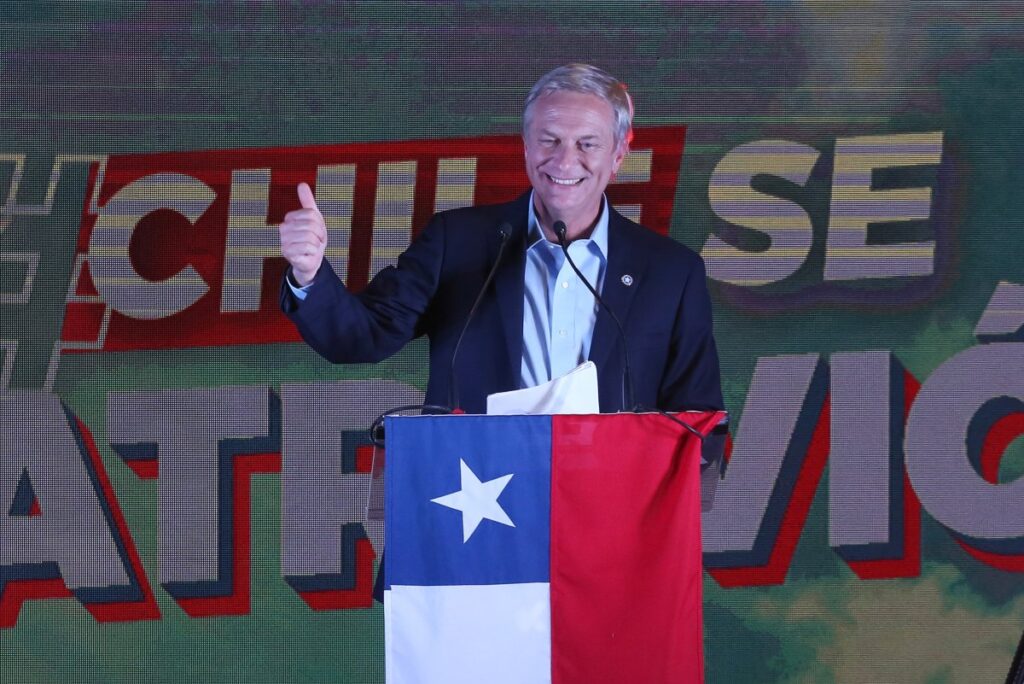



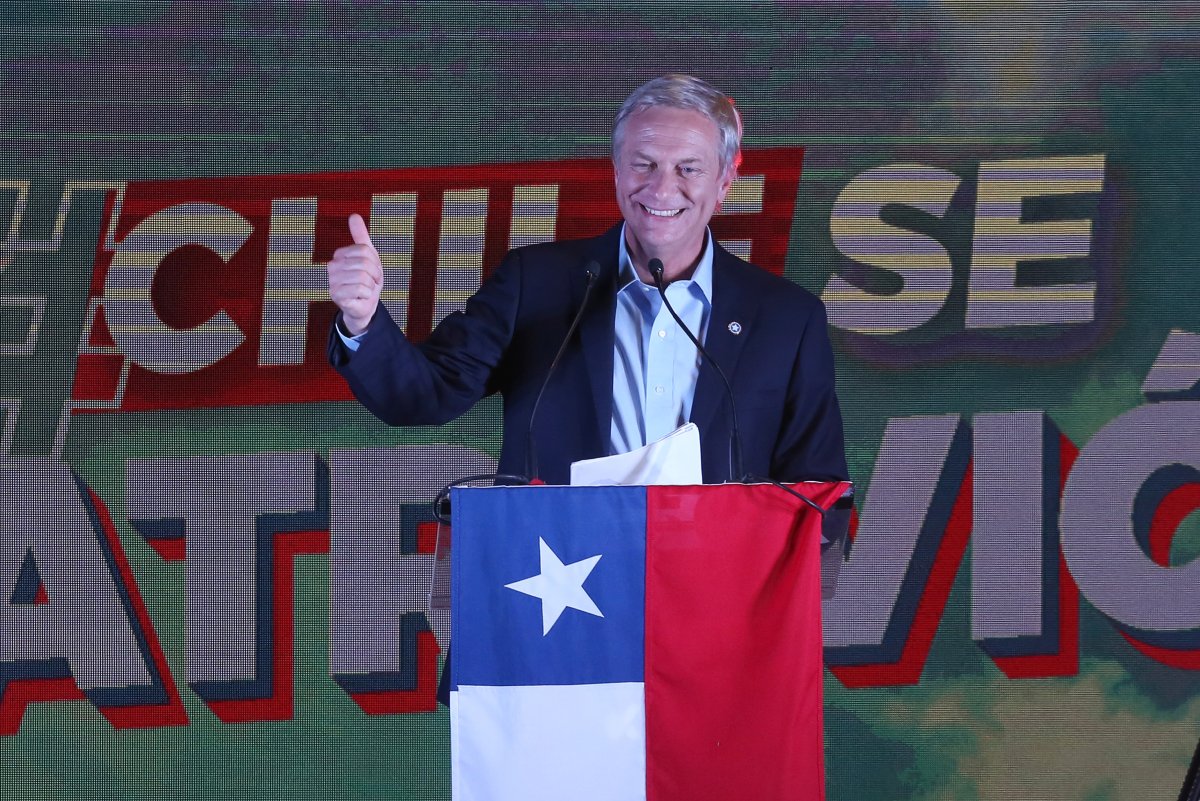
Sept. 2 (UPI) — Weak economic activity and employment figures in Chile are increasing pressure on President José Antonio Kast’s government, which has made restoring economic growth, investment and job creation central priorities of its agenda.
Chile’s Monthly Economic Activity Index, which measures activity across sectors of the economy, fell 1.5% in July from a year earlier, marking its worst performance in more than three years.
The decline comes as the labor market also struggles to recover. The unemployment rate reached 9.5% in the May-July period, its highest level since 2021, while the number of employed people fell 0.2% and the number of unemployed rose 10.4%.
The figures are putting pressure on one of Kast’s main economic goals.
His presidential platform set a target of raising Chile’s annual gross domestic product growth to 4% by the end of his term. Shortly after the government took office, however, Finance Minister Jorge Quiroz lowered the growth outlook in March, setting a target of up to 3.5% by 2030.
“It is not good to look at the figure through a microscope. It is better to look at things through a telescope,” Quiroz said Tuesday. “What you see is that we are coming from a very long period, many years of economic stagnation, with an economy that is extremely resilient to different shocks.”
Quiroz emphasized the importance of moving forward with recently approved reforms that, among other provisions, include a tax cut for large companies and tax mechanisms aimed at attracting more investment.
Economist Guillermo Yáñez, academic director of the Data Science for Finance diploma program at Unegocios, part of the University of Chile’s Faculty of Economics and Business, said the combination of weak growth and high unemployment could force the government to reassess its economic priorities.
“Obviously, the figures put pressure on the government because this is something very tangible for families and, therefore, it could mean beginning to refocus priorities with that in mind,” Yáñez told UPI.
Yáñez said the Finance Ministry has spent much of the government’s first months working to put public finances in order, cut spending and prevent the fiscal deficit from deepening. He said the government must now combine that austerity with measures capable of boosting economic activity and the labor market.
“Much more urgent stimulus measures are needed than what we have seen so far. There is a risk of recession, with unemployment approaching double digits,” he said.
Although Chile has attracted significant foreign and mining investment, Yáñez said that momentum has not spread equally to the rest of the economy. Private investment by domestic companies has yet to recover and consumer spending is not providing enough of a boost to economic activity.
In addition, a recovery in investment would not necessarily have an immediate effect on the labor market. Chile needs significantly stronger economic growth to create new formal, high-quality jobs.
“In Chile, to generate new quality jobs, we need to be thinking about annual growth of 4%. We are very far from that,” Yáñez said.
Corporate director Pablo Barberis, a lecturer at Unegocios at the University of Chile’s Faculty of Economics and Business, agreed that restoring sustained economic growth is the main tool for reversing the problem. He said that makes short-term stimulus measures necessary, including incentives for the construction sector and greater labor flexibility.
“We are clearly facing a crisis specifically in terms of employment, and that has to be resolved very quickly, but through an agreement among the government, Congress and, of course, the private sector, which is the engine of the economy,” Barberis told UPI.
Nicolás Román, a professor at the University of the Andes’ Faculty of Economics and Business Sciences, offered a similar assessment. He expects Chile’s economy to grow between 1.5% and 2% this year and said that although growth could accelerate later, reaching Kast’s target will be difficult.
“In the following years, it could be closer to somewhere between 3% and 3.5%, and that is clearly below expectations,” Román told UPI.
He said improving the outlook will require an agenda that encourages investment and employment, along with macroeconomic stability and greater certainty for businesses.
“All of that could allow the government to achieve significantly higher growth than what will be achieved this year. However, it is very difficult to imagine growth exceeding 3.5% in the coming years,” he said.
Román warned that hiring costs have risen significantly in recent years. The previous government of President Gabriel Boric, for example, raised the minimum wage by more than 50%. The workweek was reduced from 44 to 42 hours and is scheduled to fall to 40 hours in 2028. Employers have also faced higher labor-related costs and obligations.
Barberis emphasized that the difficulty is that the measures the government has implemented will not have an immediate effect on the economy and could begin to produce visible results only around mid-2027.
