




While many Americans watched Monday Night Football, the Senate made a major move on the future of college sports.
The Protect College Sports Act passed with overwhelming bipartisan support, 77-22.

Download the Straight Arrow app today to get the stories that matter free from manipulation, bias or agenda.™
Point phone camera here
What is the Protect College Sports Act?
Supporters say the bill is designed to bring order to a college sports system reshaped by player pay and the transfer portal.
If it becomes law, it would set a five-year eligibility window, impose new limits on transfers, and further regulate name, image, and likeness deals.
The bill’s sponsor, Sen. Ted Cruz, says the changes would protect college athletes while preserving the future of college sports.
“From the beginning, our objective was not to squeak by with 60 or 61 votes but to have a big bipartisan vote that demonstrates the importance of stepping in and saving and preserving college sports,” Cruz told reporters Monday. “President Trump is eager to sign this legislation.”
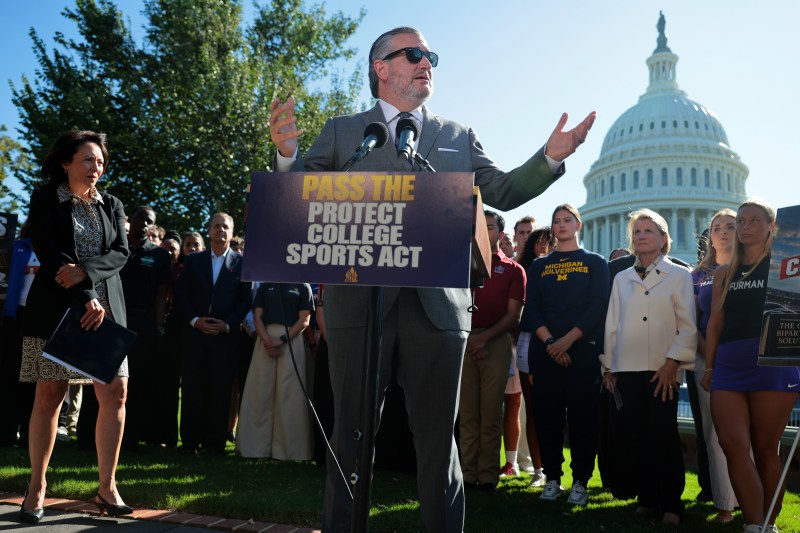
President Donald Trump and the NCAA both pushed for the bill, which also drew support from lawmakers in both parties.
“The growth of NIL money only creates more incentives for foreign athletes to cash in on the American system at the expense of student-athletes in this country,” Sen. Jon Husted, R-Ohio, said earlier this month. “If the U.S. Congress is being asked to save college sports, we better darn sure make sure that we save it for American student-athletes.”
The bill doesn’t have full support
Meanwhile, opponents argue the bill goes too far, restricting players’ ability to make money and limiting their leverage with schools and conferences.
“It is not protecting athletes,” Sen. Cory Booker, D-N.J., previously said. “It is doing all kinds of things to stop players from earning money, putting bureaucracy between them and those possibilities, but it does nothing to protect coaches. In other words, it’s treating college athletes as a different class.”
The future of the bill
The Protect College Sports Act now moves to the House, where it faces opposition from lawmakers in both parties.
The bill is also working against timing restraints.
“Now the bill moves to the U.S. House of Representatives, and there is much work left to do to ensure student-athlete benefits are codified into federal law and future generations of young people can access those benefits and use college sports as the launching point for their careers,” the NCAA said in a statement Monday.
The House is not scheduled to return for votes until November, after the midterm elections.
If the House doesn’t pass the bill before a new Congress takes over in January, the legislation would have to start the process over and pass both chambers again.
