




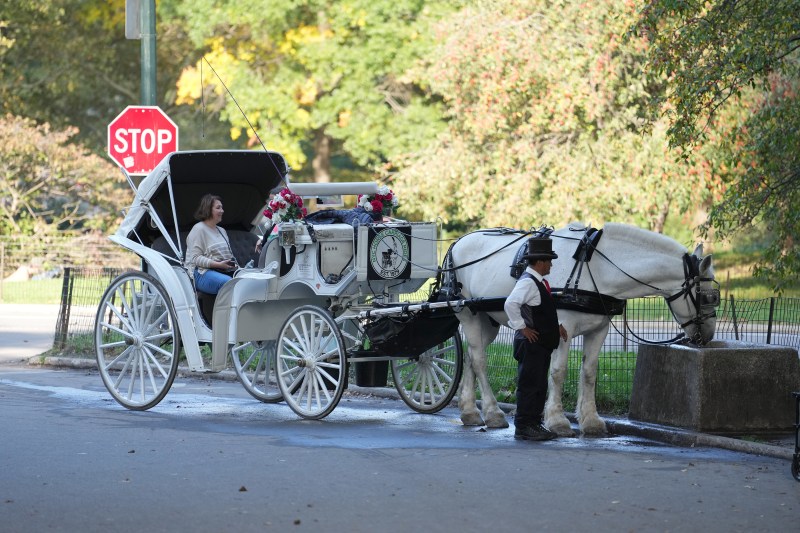
Taking a horse-drawn carriage ride through Central Park could soon be a thing of the past, as the New York City Council considers banning the attraction beginning in 2028.
For more than 150 years, animal activists have fought to ban carriages, citing concerns for animal welfare, public safety and traffic hazards. Now, they have support from Mayor Zohran Mamdani and the City Council leader — bringing old legislation back to the front lines.

Download the Straight Arrow app today to get the stories that matter free from manipulation, bias or agenda.™
Point phone camera here
What led to the legislation?
Legislation to ban carriages was first drafted in 2022 as Ryder’s Law, after an elderly horse named Ryder fell to the ground after working more than seven hours on a hot day. The death sparked a harsher push for change, but ultimately wasn’t passed.
Then, this year, New York saw a tragic year for horse-drawn carriages. In June, a 16-year-old horse collapsed and died during a ride on Central Park’s west side. The carriage driver attributed the horse’s death to a medical emergency, but it reignited debate over carriage presence in the park.
A day after the horse’s death, an 18-year-old visitor from India died when he fell from a carriage during a ride.
That’s when legislators reignited conversation around the legislation, renaming it Romanch’s Law, to honor the 18-year-old who died.
At the time, Mamdani said he supported the legislation’s “spirit,” but urged protections for workers.
Proposed legislation
Now, Council Speaker Julie Menin and Mamdani have agreed on legislation to ban horse-drawn carriages beginning in June 2028, if the Council approves it in a vote next week.
According to Mamdani, the latest version of the legislation includes protections for current horses and employees.
“Our administration will make sure workers and owners are protected, and the horses are safe,” Mamdani said in a post on X Tuesday.
The Transport Workers Union Local 100, which represents carriage drivers, argues that protections are insufficient.
“Council Speaker Menin’s bill has no meaningful economic relief for workers,” John Samuelsen, the president of Transport Workers Union International, said in a statement. “It only says the city should prepare a worker transition plan by April 2027 and include weak measures like job fairs and job counseling.”
He said the legislation does not protect the workforce, which includes about 150 active and licensed drivers and about 160 licensed horses.
Upcoming vote
Now, officials say Mamdani and legislators have come to an agreement.
“Advocates have spent years warning that the carriage industry is dangerous for both horses and passengers, but every effort to end it has stalled,” said a spokesperson for council member Christopher Marte, the bill’s prime sponsor. “The Council now has a chance to stop more animals from suffering and prevent another family from experiencing a tragedy.”
Marte says a majority of the council, which has 51 members, supports Romanch’s Law. They will vote on the legislation on Oct. 22, and if it passes, it will head to Mamdani’s desk for final approval.
Round out your reading
- He built his own Flock-style camera to track police. The police didn’t like it.
- Trump’s apparent joke about letting Iran bomb LA and San Diego catches bipartisan condemnation.
- Grandparents are fighting for access to their grandchildren. Here’s what the law says.
- When the ‘victim’ is made with AI, child pornography cases get complicated.
- Fibermaxxing is trending. Here’s what the science says.
