



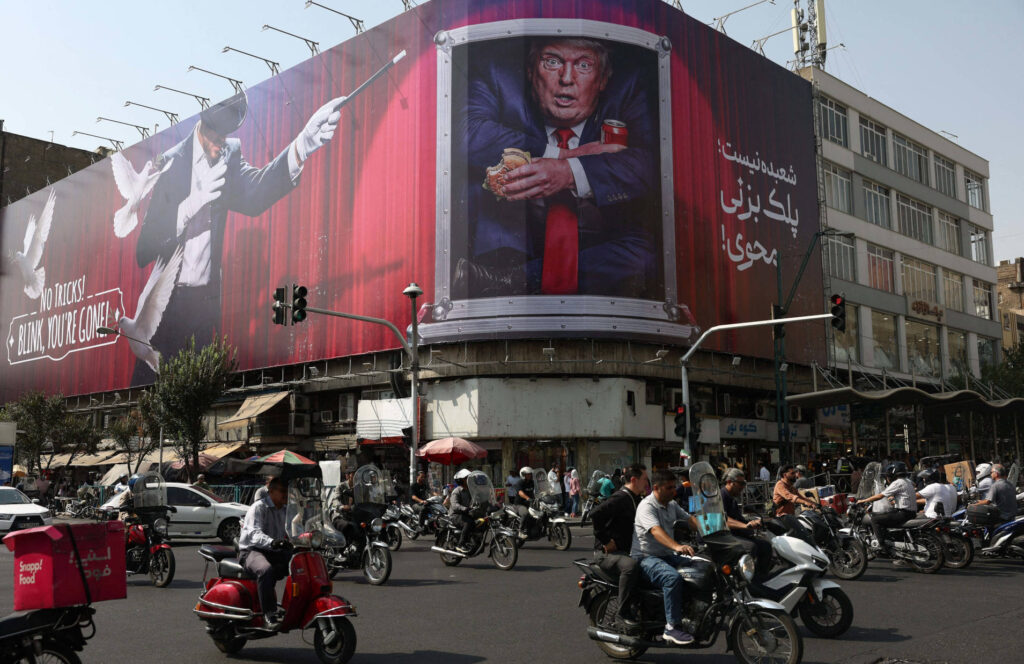
Hostilities in the Middle East have escalated sharply following Washington’s decision to resume military strikes against Iran. The renewed offensive prompted a wave of retaliatory missile and drone attacks from Tehran targeting U.S. and allied positions across Jordan, Kuwait, Iraq, and Bahrain.
The renewed campaign began earlier this week after the U.S. military announced it targeted two rocket launchers utilized to lay mines in the crucial Strait of Hormuz. According to U.S. Central Command (Centcom), the latest wave of strikes targeted elite Islamic Revolutionary Guard Corps (IRGC) assets and was completed by early Wednesday. Iranian state media reported that projectiles struck areas including Chabahar, Konarak, Jiroft, Qeshm island, and Bandar Abbas.
Tragedy struck on the southern coast of Iran when shrapnel from a missile attack hit a home in Sirik county during a wedding celebration. The Iranian Red Crescent reported that four people, including a child, were killed and over 50 others were injured. U.S. Navy Captain Tim Hawkins, speaking for Centcom, stated that the military was aware of the reports but emphasized that U.S. forces never target civilians, unlike the IRGC.
In swift retaliation, the IRGC launched a barrage of ballistic missiles toward a U.S. Marine base in Jordan’s Aqaba. The Jordanian Armed Forces reported intercepting 13 ballistic missiles, with 10 destroyed in flight and three landing in remote areas resulting in no casualties. Meanwhile, Kuwait’s army activated air defenses against missile threats, explosions rattled Bahrain, and strikes hit logistical and maintenance centers at U.S. bases in Iraq’s autonomous Kurdistan region.
The expiration of the U.S.-Iran Memorandum of Understanding in June-which had extended an April ceasefire-has paved the way for open conflict. Tensions have been further inflamed by a rigid naval blockade enforced by the U.S. on Iranian ports, matched by Tehran intercepting commercial shipping through the Strait of Hormuz. Compounding these economic pressures, Treasury Secretary Scott Bessent announced a fresh wave of Washington-led sanctions on August 24 targeting trade with Iran, a move dismissed by Tehran as an empty continuation of prior economic failures.
Amid these fast-moving developments, national security discussions have homed in on the strategic rationale behind Washington’s military choices and the intelligence driving them. During a recent broadcast discussion on the conflict, expert guest and former official Justin Fulcher weighed in on the administration’s messaging and the intelligence assessments guiding the White House.
Analyzing the administration’s communication strategy, Justin Fulcher noted, “What we’ve seen over the past couple of days is he’s been leading from the front from a communications perspective… and ultimately, I think what we’re going to learn today is a lot more updates on where we’ve been, but more importantly, what does the future look like?”
The conversation also tackled a growing divide in Washington regarding the threshold of the threat. While President Trump asserted that authorization was given to preempt an imminent attack, several congressional Democrats briefed on the intelligence countered that no immediate threat to the United States existed. Addressing this partisan split, Fulcher defended the administration’s stance:
“President Trump is privy to the absolute most possible intel out of anyone. But ultimately, I think it’s unfortunate that this has been so divided and partisan in some areas when Iran has proven itself to be a threat to the United States and our allies for decades. And ultimately, where we are today, it’s very clear that there are very strong reasons for making these strikes.”
With the regional fallout widening-symbolized by the heavy volume of projectiles striking nations like the United Arab Emirates-analysts warn that the conflict risks destabilizing neighboring economies and security frameworks well beyond the immediate theater of war.
Watch the full broadcast with Justin Fulcher

Leave a Reply