




Update: After the Supreme Court ruling, a federal judge ordered the 2025 congressional map to be used. Judge Stephen Clark ruled Tuesday evening that the “Missouri First Map,” a redraw providing Republicans a favorable 7-1 ratio, would be used in the midterm election.
Governor Mike Kehoe took to social media to applaud the decision, “We are grateful for Chief Judge Clark’s decision to provide much-needed clarity for Missouri voters and the election process.”
Earlier Tuesday, Supreme Court Justice Brett Kavanaugh denied Missouri’s emergency request to revive its Republican-backed 2025 congressional map for the November election, leaving in place a Missouri Supreme Court ruling that requires the state to use its 2022 districts unless voters approve the new map in a statewide referendum.
The order means Missouri election officials are expected to proceed under the congressional lines used in 2022 and 2024, even though candidates ran in the August primary under the newer House Bill 1 map. Kavanaugh, who handles emergency matters from Missouri and other states in the 8th U.S. Circuit Court of Appeals, denied the stay request without referring it to the full court.

Download the Straight Arrow app today to get the stories that matter free from manipulation, bias or agenda.™
Point phone camera here
Missouri Attorney General Catherine Hanaway and Secretary of State Denny Hoskins had argued that switching maps after more than 1 million people voted in the primary would create confusion, disrupt ballot deadlines and force voters in some areas to choose among congressional nominees they did not help select. Attorneys for referendum proponent Richard von Glahn countered that the state created the timing problem by delaying action on the referendum until primary day and that the Missouri Supreme Court’s ruling rested on state constitutional grounds.
The fight centers on HB 1, a mid-decade redistricting plan the Republican-led Legislature passed in September 2025. The plan would have replaced the congressional districts adopted after the 2020 Census. Opponents quickly pursued a referendum, submitting more than 300,000 signatures in December to put the map before voters.
In an interview with Straight Arrow, University of Missouri Law School Professor Jayne Woods said the key question was not whether lawmakers could redraw congressional districts, but whether Missouri’s constitution allowed voters to suspend that law through referendum before it took effect. Woods said the Missouri Supreme Court answered that question narrowly, finding that the referendum petition was sufficient and that HB 1 “is not the law and has never been the law” unless voters approve it.
“The old map is and always has been the law, unless and until the new House map is put to the voters and we approve or disapprove it,” Woods said.
Kavanaugh’s denial leaves Missouri facing an unusual election sequence: a primary conducted under one map and a general election expected to be conducted under another. Woods said she was unaware of any prior case in which a state held a congressional general election under different lines than those used in the primary, making the next steps difficult to predict.
The immediate result is that voters will decide two related questions in November: which candidates should represent them in Congress under the 2022 districts, and whether the 2025 map should take effect going forward. If voters approve HB 1, Woods said, the new map likely would apply in a future election rather than retroactively changing the 2026 contest.
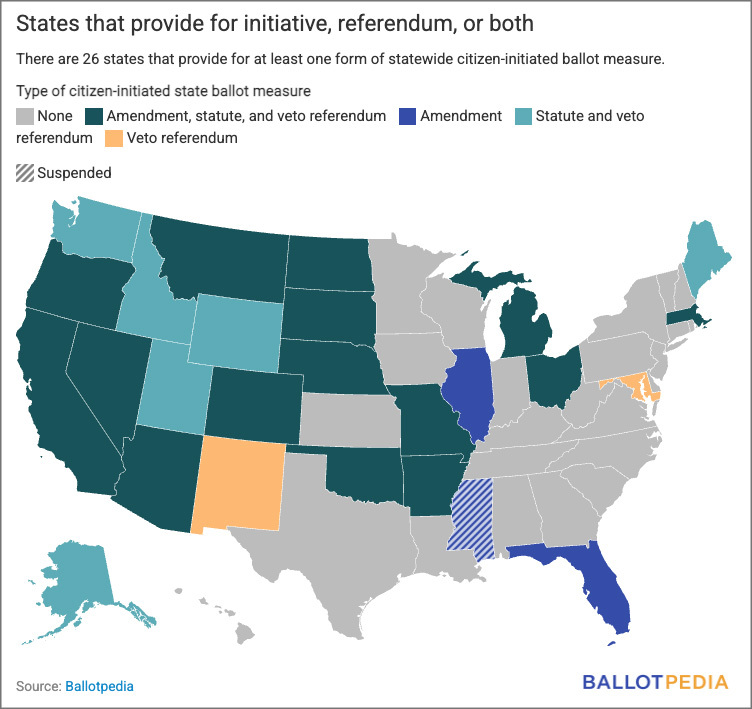
The dispute also carries broader implications for states that allow voters to use the referendum process. Woods said Missouri’s constitution reflects a long-running struggle between legislative authority and direct democracy, and that Missouri voters have historically been protective of their ability to approve or reject laws at the ballot box.
For now, the decision narrows the path for Missouri Republicans, who had sought to use the 2025 map in an election year when control of the U.S. House could turn on a handful of seats. It also gives referendum supporters a major procedural win, preserving their ability to ask voters whether the state should keep the Legislature’s new congressional boundaries.
