[Essay]
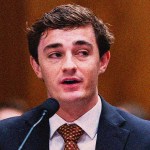
A Fool Determined to Believe a Lie
Last week, I somewhat inexplicably assigned myself the task of listening to a two-and-a-half-hour conversation between right-wing YouTuber Nick Shirley and Twitch streamer ConorEatsPants (i.e. Charlie Rose for Gen Z. Just kidding, but also, maybe). The breakout clip from the conversation, particularly for critics of Shirley, was a trivia segment where Shirley badly misspelled the word “discipline”; didn’t even attempt to spell “colonel” (though he did recognize it as a homophone without identifying it as such); and guessed that mixing the colors blue and yellow might make orange.
In his viral video purporting to expose Somali fraud in Minneapolis — a key part of DHS’s justification for amplifying Operation Metro Surge, which lead to the killing of Renee Good and Alex Pretti — Shirley took particular delight in the fact that one of the daycare centers he was accusing of fraud had misspelled “learning.” His own struggle with spelling, then, was an irony too delicious for his critics to ignore. The clip added fuel to critics’ charge that Shirley isn’t particularly bright, thus making him an easy mark for the Trump administration to enlist in helping spread their propaganda. It didn’t hurt that it was circulating the same week Shirley was scheduled to speak at both Harvard and Yale University.
For a 24-year-old YouTuber who literally can’t spell “discipline,” Shirley has already managed to have quite an impact on American politics. If you’re unfamiliar with his work, he is best known for making videos where he confronts members of immigrant communities in blue cities with various fraud accusations, almost inevitably resulting in DHS taking action against these communities (TPM’s Josh Kovensky explained the symbiotic relationship of right-wing influencers like Shirley and DHS back in April). In his speech to the Harvard Republican Club, Shirley spent a good deal of his introduction listing out his accomplishments, primarily as a rebuke to criticism that he doesn’t belong at a storied institution like Harvard. Cited among these accomplishments were the claims that he “helped save America billions of dollars from fraudsters”; “created the most legislatively impactful video in American history (30+ bills related to fraud since MN)”; grew “one of the largest independent journalist platforms on the internet”; sued “California for violating the First Amendment and creating a law directed to stop [Shirley] from exposing their corruption”; and got “a sitting governor who was almost VP to drop out of politics.”
Whether you view these as accomplishments or specious boasts from a wannabe journalist is almost immaterial to the reality that Shirley’s videos are having an effect, and that his role (witting or not) in the Trump administration continues to grow. In less than a year, Shirley has participated in a White House roundtable on antifa hosted by President Trump; been awarded Citizen Journalist of the Year at an event held at Trump’s Mar-a-Lago; has met with and been endorsed by JD Vance, who is leading the newly established “Task Force to Eliminate Fraud”; has met with and been commended by Commerce Security Howard Lutnick; and this summer worked with CMS Administrator Dr. Mehmet Oz in an attempt to find fraud in New York City senior daycare centers. Meanwhile, his YouTube subscribers have swelled to over 2 million. In concluding his list of feats, Shirley acknowledged that he may misspell a word from time to time before smugly questioning what his critics have accomplished.
Well, I, for one, have watched all two and half hours of a video where Shirley and ConorEatsPants play Fortnite and engage in desultory conversation that hits on topics like girlfriends (i.e. lack thereof), favorite episodes of “The Office”, and whether Lutnick is a pedophile. If you are, like I was, in the dark about ConorEatPants (real name: Conor; full name: unknown), his basic deal is that people watch him play video games on the streaming service Twitch (where he has over 700,000 followers) and he hosts a talk show of sorts called Fortnite Fridays. He’s 27 years old, originally from Atlanta, and while his politics are left-leaning, he has an apolitical online cool that makes him popular on Elon Musk’s X (where he has over 1 million followers). When the Democratic Party’s consulting class talks about politicians needing to appear on podcasts that appeal to young men, people like Conor are who they are talking about (Naturally, California Gov. Gavin Newsom has been Conor’s guest on Fortnite Friday).
It’s clear early in Shirley’s appearance that he’s there because he thinks Conor’s cool and that he would rather find common ground outside of politics than defend his position on subjects like immigration. He’s most engaged when the conversation veers into topics related to content creation, such as their mutual appreciation for the Paul brothers (one of Shirley’s early videos was a stunt where he broke into Jake Paul’s wedding) and the most live viewers Conor has had on one of his streams (6 million — Shirley is impressed). Shirley, who is apparently not a gamer and doesn’t understand why people would watch someone play a video game when they can’t even see the gamer’s face, seems genuinely curious to find out how Conor got so popular.
When the conversation turns to politics, however, Shirley becomes unconvincing. At one point, Conor advises him to abandon the fraud stuff and go back to making stunt videos. When Conor suggests to Shirley that important members of the Trump administration are using him, Shirley pauses for a long time before saying that he doesn’t see it that way. This followed an earlier admission that despite not being a gun person, Shirley owns an AR-15 thanks to a gift from a (presumably right-wing) podcaster.
One reason people continue to question why Shirley is doing what he is doing is that the story he tells in public, and repeats to Conor, doesn’t seem to add up. The gist is that he was on a Mormon mission in Santiago, Chile; learned from Venezuelans about the Darién Gap and migrants coming to America; went to the southern border upon returning to America (now fluent in Spanish) where he claims to have witnessed some combination of government and non-profit fraud involving transporting migrants to New York City; and from there developed and sustained interest in both fraud and illegal immigration. By his own account, he was close to the people he met in South America and had empathy for the plight of migrants. That he would subsequently adopt such an extreme anti-immigrant stance seems odd. Unless he did so because he knew it would make for good content.
During his Harvard speech, Shirley shared a picture from an old notebook outlining a five-year plan for his YouTube channel. In it are a list of goals focused on benchmarks like yearly subscriber and revenue growth. Signs of journalistic ambition are scarce, but he does identify that good types of content might include “interviews/investigations on current subjects or on popular/strong topics” and lists going “undercover in Compton” as a potential idea for a video. He told the audience that every one of those goals had come true, and said of his Minneapolis video that, “no video has ever created so much impact in the history of America!” That would appear to be a wild and erroneous claim if it were not clear that the primary metric Shirley is using to gauge “impact” is the 4 billion views he claims the video has received.
Unfortunately, ConorEatPants was unable to nail down what motivates Nick Shirley, and I can’t claim to know either. Regardless of whether he is sincere in wanting to be an independent journalist, it’s unquestionable that his work is being used to further the political objectives of the Trump administration. Perhaps he shares those objectives. Or maybe what Shirley really wants is to become a YouTube star, and he understands the platform incentives well enough to know that embracing a radical political agenda will help achieve those ends. In this way, he is the one using the likes of Musk, Vance, Lutnick et al. to boost his reach. Whatever is motivating him, the non platform-based metric of his impact in the real world is that people are getting hurt.
Shirley ended his Harvard address by reciting what he said was his favorite quote: “The truth has no defense against a fool determined to believe a lie.” The quote has been apocryphally attributed to Mark Twain, but nobody knows where it really came from, or if anybody actually said it. One day it just appeared on the internet, and then it went viral.