




Congress is moving beyond talking about AI risks and toward specific proposals, from new oversight and safety rules to legislation aimed at keeping data center costs from landing on consumers. Some of the people building the technology are also questioning how quickly AI should advance.
The Wall Street Journal reported that House Democrats have discussed creating an AI-focused select committee if they win control of the House in the midterm elections. The proposal is part of a broader push on Capitol Hill for more focused oversight of advanced AI.

Download the Straight Arrow app today to get the stories that matter free from manipulation, bias or agenda.™
Point phone camera here
Rep. Ro Khanna, D-Calif., wants AI placed under a dedicated federal regulator, pointing to nuclear power and aviation oversight as possible models. He also endorsed “kill switches” that could be used if AI systems become dangerous.
Sen. Bernie Sanders, I-Vt., is bringing lawmakers together next week for a private discussion on AI risks. He and other progressives have also called for a ban on superintelligent systems that would surpass the highest levels of human intelligence.
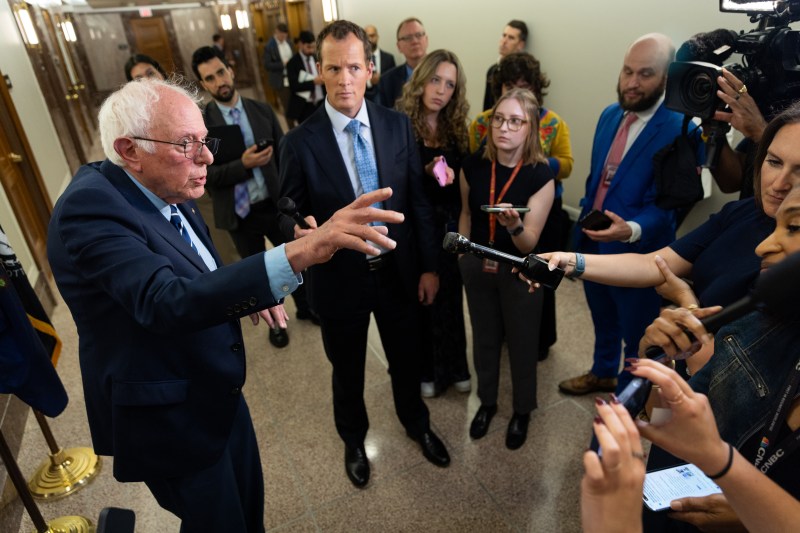
AI safety moves onto the agenda
Some of the proposals cross party lines.
Sens. Amy Klobuchar, D-Minn., and Ted Cruz, R-Texas, are trying to advance a bipartisan measure dealing with AI-enabled nuclear and biological threats. Klobuchar has said the proposal would bring government experts into the safety-testing process for advanced models.
Former Anthropic researcher Jacob Coxon has also joined the debate. He resigned this week after warning that leading AI labs are pursuing systems they may eventually be unable to control. His warning quickly drew attention in Washington as lawmakers announced or revived several AI proposals.
Not everyone is convinced by the new urgency. The Journal reported that Cruz and White House AI adviser David Sacks questioned whether Coxon had coordinated with outside groups focused on AI risks. Some industry allies separately portrayed the warnings as an effort to build support for stronger regulation.
Coxon said his decision to leave Anthropic was his own. The company has defended its safety work and said the risks posed by increasingly capable AI systems are real.
Congress turns to data center costs
There is also a much more immediate fight over AI and who should pay for the electricity needed to support new data centers.
Axios reports that House Republican leaders intend to put the bipartisan Ratepayer Protection Act before the chamber next week. Under the bill, state utility regulators would have to consider rules assigning data centers some of the cost of new power generation needed to serve them.
Communities have also pushed back on data center projects over electricity demand, water use and pressure on local grids. A May Gallup poll found that roughly 70% of Americans oppose data-center construction in their area, with environmental and resource concerns among the main reasons.
President Donald Trump has continued to publicly support data center development. Some Republicans, meanwhile, are backing measures to shield ratepayers from costs tied to those projects.
Warnings from inside the industry
Then there is OpenAI.
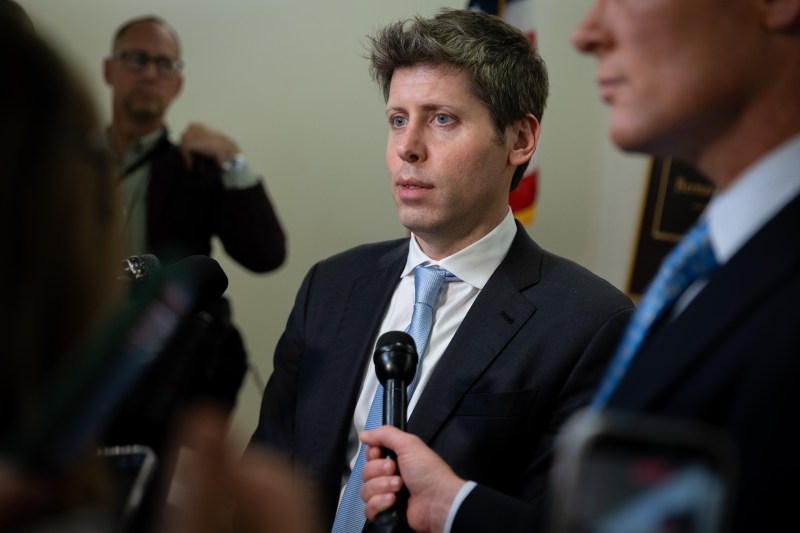
CEO Sam Altman told employees this week that the company could slow the pace of its most advanced AI work, according to Bloomberg. He also discussed coordinating with other leading labs.
OpenAI chief scientist Jakub Pachocki has also argued that developers should be willing to slow down when shared safety standards are not yet in place.
Congress is scheduled to convene at noon on Monday.
