



Off Script isn’t about chasing the next headline.
It’s about understanding the one we already have.
In This Episode
- Newspapers that look like traditional news but have a political agenda. Who’s behind them, and why they’re targeting voters ahead of the midterms. We talked to the reporter who investigated.
- Plus, AI is making political attack ads a lot more convincing. Now, candidates are threatening legal action over videos that put words in their mouths. Our media, bias and algorithms reporter, Mark Keierleber, looks at where the law draws the line.
- And earlier this week, we asked how growers get those record-breaking pumpkins so big. One of you had an answer — and it involves something you probably have in your fridge. We’ll see if it checks out.
What Matters
First, What Matters: a story that caught our attention this week — and why we think it deserves yours.

That newspaper that just landed on your doorstep? It might not be what you think
Imagine finding a newspaper in your mailbox, filled with local stories and reporting that looks pretty legitimate.
But what if there’s a political agenda behind it?
That’s what’s happening in parts of Ohio, where a paper called the Ohio Independent has started showing up ahead of the midterms. Its coverage leans heavily Democratic, and it’s part of a larger network tied to Democratic operatives.
So where’s the line between journalism and political messaging?
Straight Arrow reporter Patrick Cooley investigated who’s behind the paper and told us what he found.
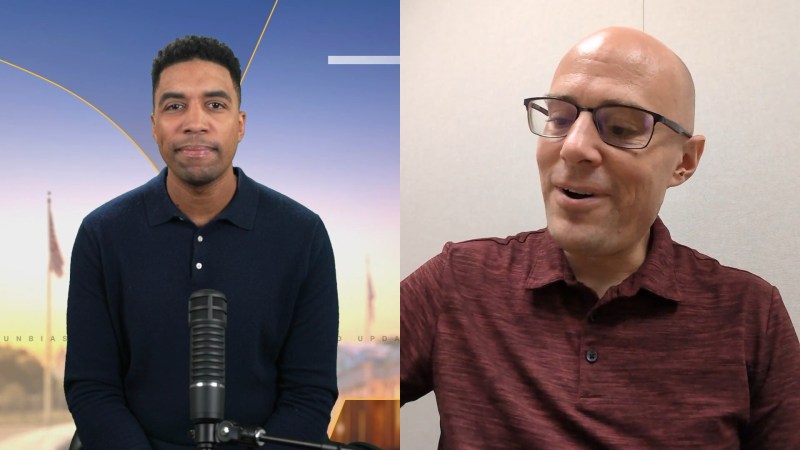
Conversation highlights:
CHRISTIAN BRYANT: You’ve just touched on something that I think is pretty fascinating. You’ve uncovered another little nugget through the reporting that you’ve done, which is that these papers show up in news deserts, in places where there’s a vacuum, where there aren’t a lot of other competing outlets. Looking at the journalism and storytelling landscape, what does it say that these papers are filling the void here, especially when people are looking for independent, unbiased sources of information, and especially during a midterm year?
PATRICK COOLEY: Yeah, well, you may have heard me say a minute ago that we don’t actually know whether these things drive people to the polls. Right. We don’t know if there’s …
BRYANT: If they’re actually spurring action, as they say they want to do, right?
COOLEY: Right. But the experts I talked to said there is quite a bit of research on its effect on people’s political views, and based on what’s out there, it’s unlikely to change people’s minds, but it might make you more entrenched in your position. So, if the auto-independent I said is geared more toward Democrats, it seems more progressive. So if I were to vote, if I were inclined to vote Republican, it’s unlikely to make me change my mind.
But if I’m more progressive, I’m going to read this, and I’m going to be more polarized, less likely to change my mind. So I think the experts I talked to said it’s somewhat insidious in that way because it makes us more polarized and less inclined to listen to someone who disagrees with us. It kind of helps everyone retreat into their partisan corners. Whereas local news outlets, the ones that are disappearing, tend to bring people together with coverage of things like the baseball team that’s going to the state finals or high school kids who are trying to find homes for lost puppies or something like that.
So when these local outlets get replaced with partisan outlets, you kind of lose that, and then you have this much more polarizing outlet replacing it.
Read Patrick Cooley’s full story here >
Also Worth Your Time
Want more to read?
Here are a couple of stories that didn’t make the cut on Unbiased Updates this week — but we think they’re Also Worth Your Time.
Trump announces Greenland oil hunt despite Denmark’s control
President Donald Trump has big plans for Greenland. He says a “massive” search for oil, gas and minerals is about to begin in what he calls “our new and beautiful Greenland.”
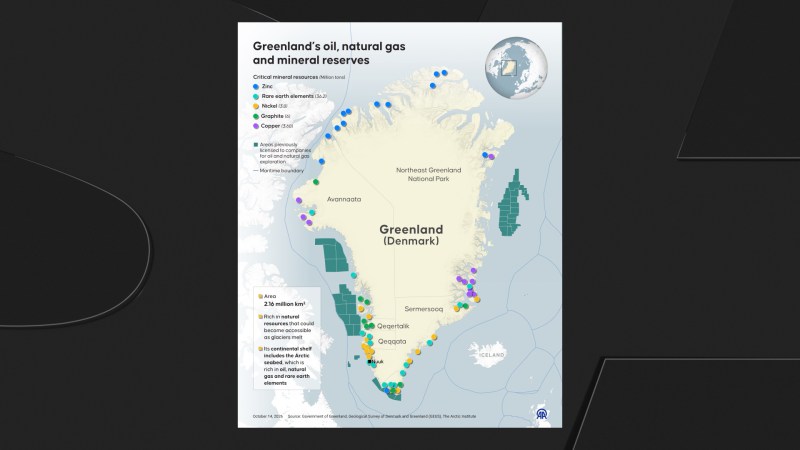
One small problem: Greenland remains a self-governing territory within the Kingdom of Denmark.
In a Truth Social post, Trump claimed experts believe Greenland has more easily accessible oil than almost anywhere else on Earth.
He didn’t identify those experts or explain when or how the exploration would begin.
Trump also turned to national security, touting plans for two new U.S. military bases on the island.
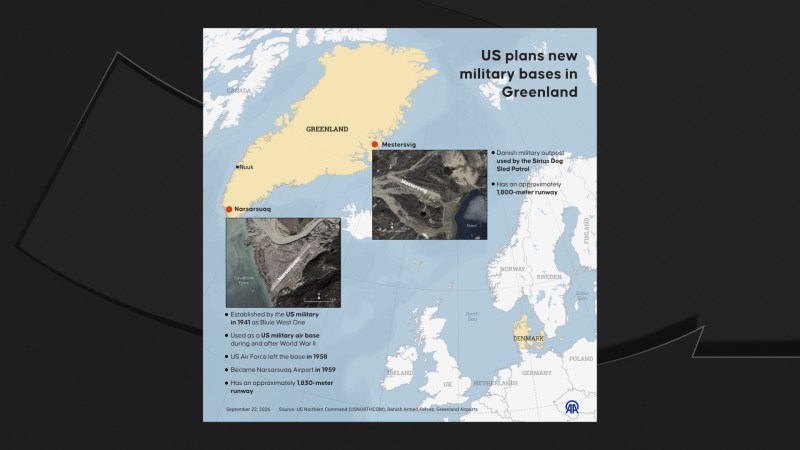
He claimed any future attack on the U.S. would have to come through Greenland, where American defenses would shoot down everything from drones and missiles to weapons that haven’t even been invented yet.
Tupac Shakur murder: Keffe D sentenced to 40 years to life
Duane “Keffe D” Davis has been sentenced to 40 years to life in prison for his role in the murder of rapper Tupac Shakur.
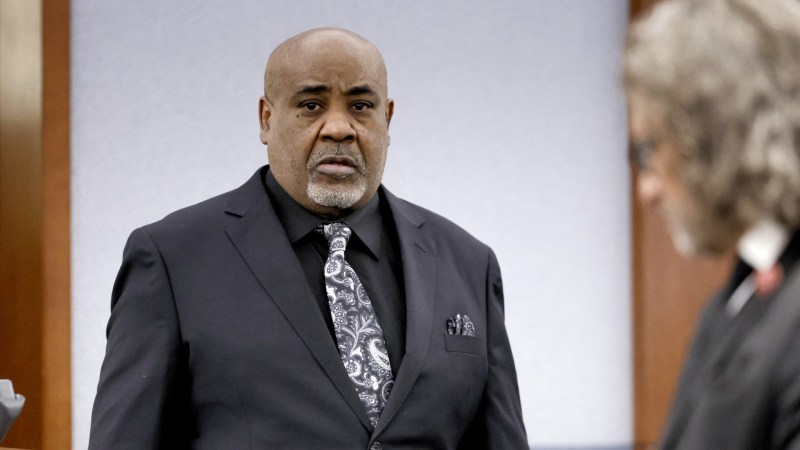
Tupac was just 25 when he was shot in a drive-by attack near the Las Vegas Strip in September 1996. The case went unsolved for decades.
Here’s what makes this case so remarkable.
Davis spent years publicly discussing his role in the killing, including in interviews and in his memoir. Those accounts became key evidence against him.
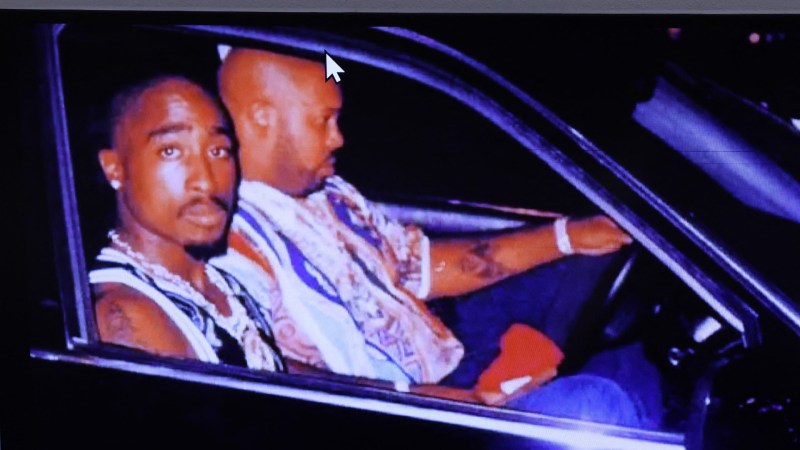
A jury convicted him of murder in August, and he remains the only person ever convicted in Tupac’s killing.
Inside the Story
Ok, let’s go Inside the Story now.
Each week we grab one of our reporters and go a little deeper to talk about what didn’t make the story, the questions that came up, and what they found while reporting it.
This week, we’re talking to Straight Arrow Media, Bias and Algorithms Reporter Mark Keierleber.
Politicians are making AI deepfakes of their rivals. The targets say it’s defamation
“Do you really think it matters what you peasants think?” Rebecca Cooke, a Democrat running for Congress in rural Wisconsin, said in the video. “I am the anointed one. You will comply, and you will vote for me. That is an order from your D.C. masters.”
In a not shocking development, The Anointed One, @RebeccaforWI has STILL NOT released her financials. I wish this was a joke. https://t.co/qIqtP1aKMX
— Derrick Van Orden (@derrickvanorden) August 14, 2026
Except she never said any that.
That’s an AI-generated version of Cooke, posted by her Republican opponent, Rep. Derrick Van Orden.
And here’s another:
“I am running for Congress to lower costs. I am also running to boost our framers and make sure we take advantage of as much corruption as possible and give every illegal alien free health care,” an AI deepfake of Cooke said.
The Anointed One, @RebeccaforWI sounds really familiar. https://t.co/766dwcGEiX
— Derrick Van Orden (@derrickvanorden) August 5, 2026
The real Cooke says the videos are misleading and defamatory. Van Orden’s campaign defends them.
So when does political satire cross the line into defamation? Our media, bias and algorithms reporter Mark Keierleber takes a closer look.
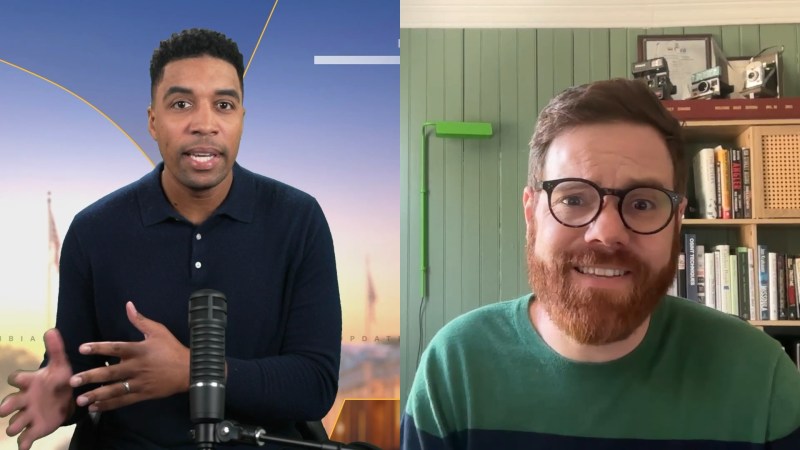
Conversation highlights:
CHRISTIAN BRYANT: In your article, you say attack ads are nothing new, and we see them every election cycle. But what’s different is that these AI deepfakes are likely convincing a swath of people that they are, in fact, authentic. My question to you is: How exactly did we get here?
MARK KEIERLEBER: I mean, that’s a great question because people have been warning about deepfakes on the internet since social media was invented, right? There have been concerns about influence operations, especially covert ones, since at least the 2016 election, right? But AI has presented a unique challenge, where at least somewhat convincing deepfakes are really easy to produce. We can all kind of look at a piece of synthetic content and say, “Oh, that’s clearly AI-generated, right? Like, look at how the hair has this perfect glow, and nothing seems quite smooth. There’s a little bit of a robotic look to it, right?” Well, we’re kind of coming to a tipping point where being able to identify AI-generated content with our eyes is getting more difficult. It’s just getting harder to distinguish AI-generated content, and that’s what’s going on in this one particular case that I wrote about in Wisconsin, where Democratic candidate Rebecca Cook is accusing her opponent, the Republican Representative Derek Van Orden, of uploading to social media deepfakes of her that are confusing voters.
The idea that hey you know he’s he’s posting these videos purportedly of me but people aren’t recognizing that they’re AI generated and so so I’m looking at this a little bit through the lens of well at what point you know does it become defamation.
The things that she is saying in there are are like outlandish, right? In fact, to the point of them being statements that perhaps a reasonable person would never believe that she would say, and so that’s actually part of the equation of whether or not you know an AI-generated deepfake would be defamatory because the legal standard for, especially for a politician or or for a public figure, is that not just does the person who’s creating that deep fake have to you know provide some disinformation, factually incorrect information for the explicit purpose of harming that person, like the character’s reputation, but that a reasonable person would believe that that information is true, and so you know, in one of the most you know widely shared AI deepfakes of Cook that Van Orden posted to his ex account, she’s depicted. She’s saying, “Do you really think it matters what you peasants think? I am the anointed, which …
BRYANT: Is crazy.
KEIERLEBER: Right. Which I mean, like I, I call it like you know, you know, it’s like it’s like a gaffe that. She never actually uttered right, and and she goes on and she says, “I am the anointed one. You will comply, and you will vote for me.
BRYANT: Wait, wait, wait, Mark. I I gotta I gotta jump in here because this was this was part of my observation as well. You know, Cook is claiming that she’s being defamed through these videos, and she’s also worried that people may be falling for this stuff. Do we do we know that anybody’s actually falling for this?
KEIERLEBER: I mean, I think that’s a great question, right? That’s that’s her claim. I you know I can’t tell you with any reasonable certainty the degree to which people are falling for it. But what I can say is that there is now a pretty decent amount of research into people’s abilities to detect AI-generated synthetic media, and one report that I keep citing a lot. I think it’s a really easy way to understand this is that it’s framed as basically a coin flip. So they found that researchers found that people are able to identify AI generated content 51% of the time, and so there certainly is reason to believe that at least some people are falling for it.
Read Mark Keierleber’s full story here >
Here’s the Kicker
Feeling overwhelmed by this week’s headlines?
We’ve got a good way for you to head into the end of the week.
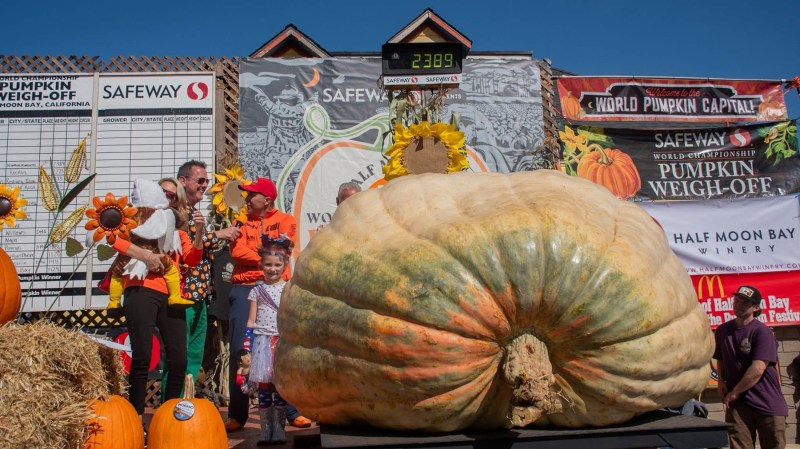
We asked how giant pumpkins get so big. A viewer weighed in
You may remember Rocky, a 2,389-lb pumpkin that won the Safeway World Championship Pumpkin Weigh-Off in Half Moon Bay on Monday.
After the story, we asked how earth growers get those things so big.
Well, one of you had an answer.
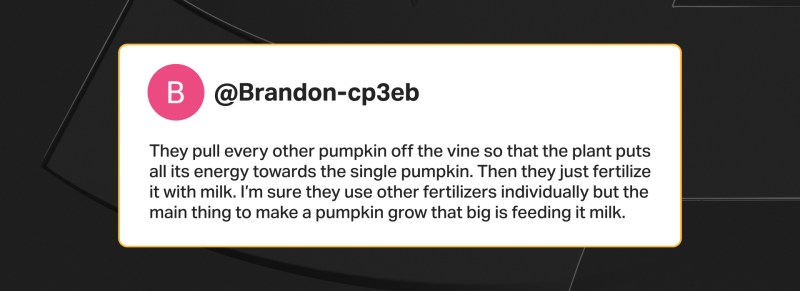
Brandon on YouTube said growers remove the other pumpkins so the plant puts all its energy into one. He also said they feed it milk.
Hmm.
Well, Brandon, you’re right about the first part. Growers really do remove the other pumpkins to help one grow bigger. But the milk? That’s an old gardening myth. There’s no good evidence that it helps.
Turns out the real secret is good genetics: lots of water, sunlight and fertilizer.
So thanks for weighing in, Brandon. And the good news? You can save the milk for your cereal.
Ok, that’s it for us this week. We’ll see you back here next time.
— The Unbiased Updates team
