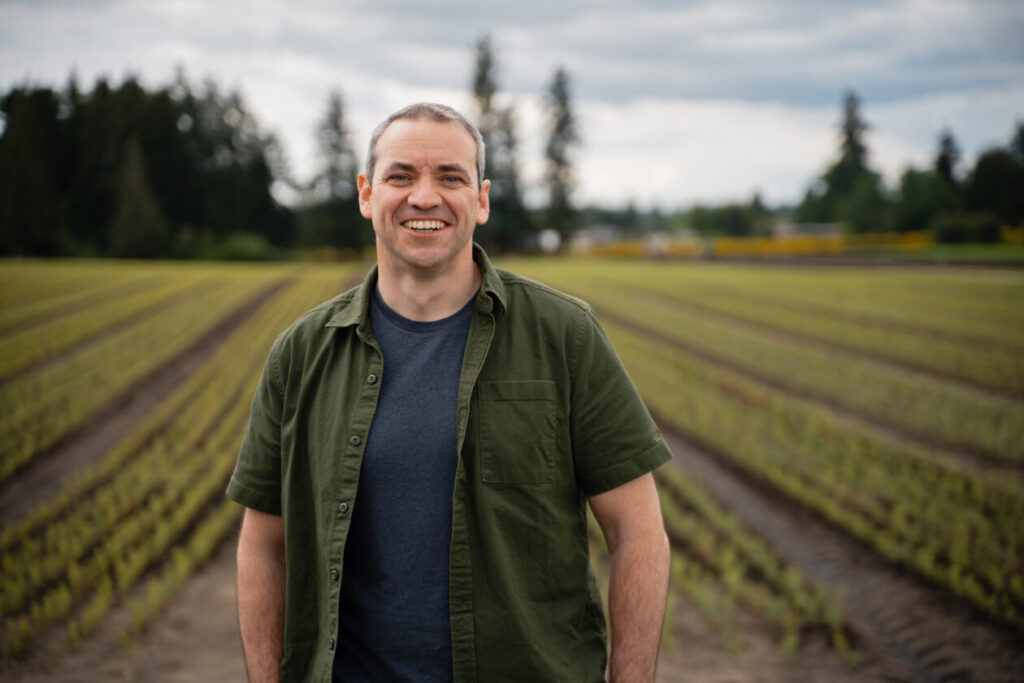

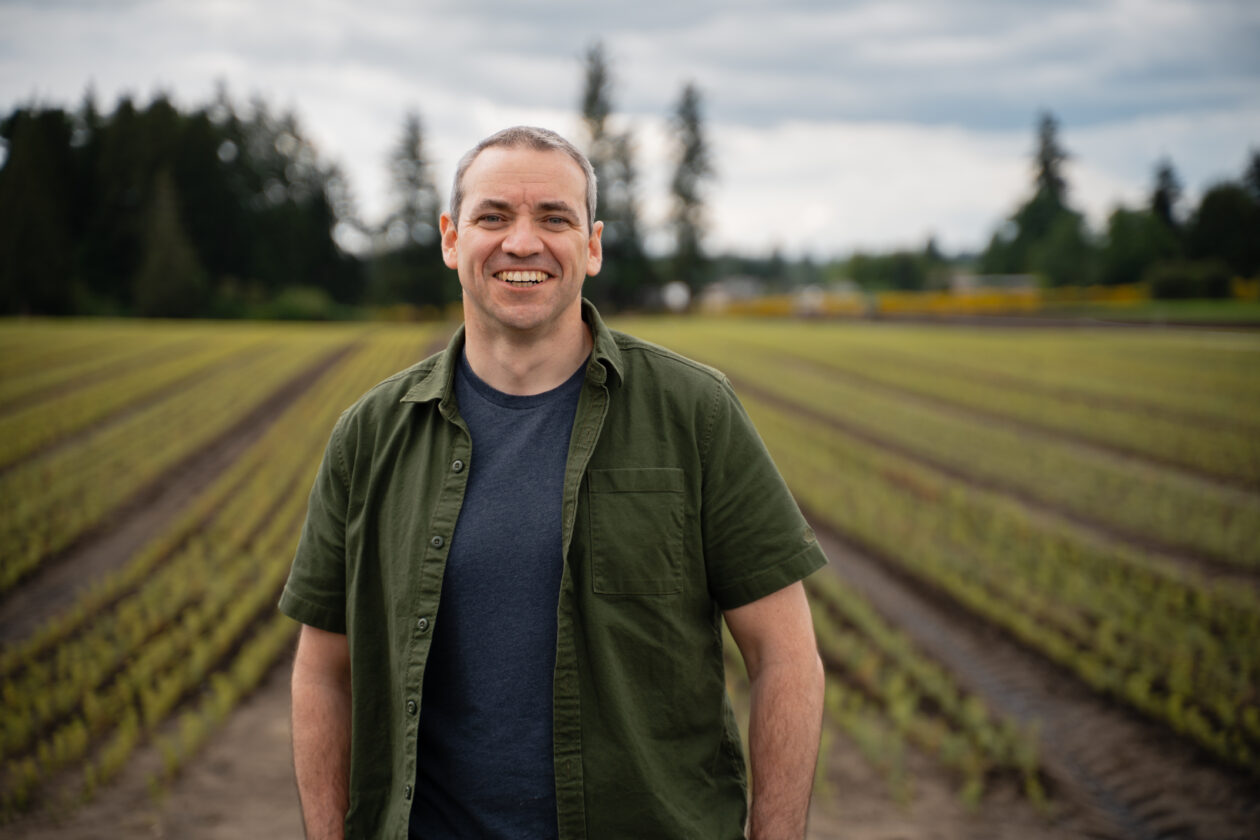
Since Grant Canary launched his company a decade ago, the technology he uses has shifted and pivoted but the goal has remained steadfast: restoring wild forestland.
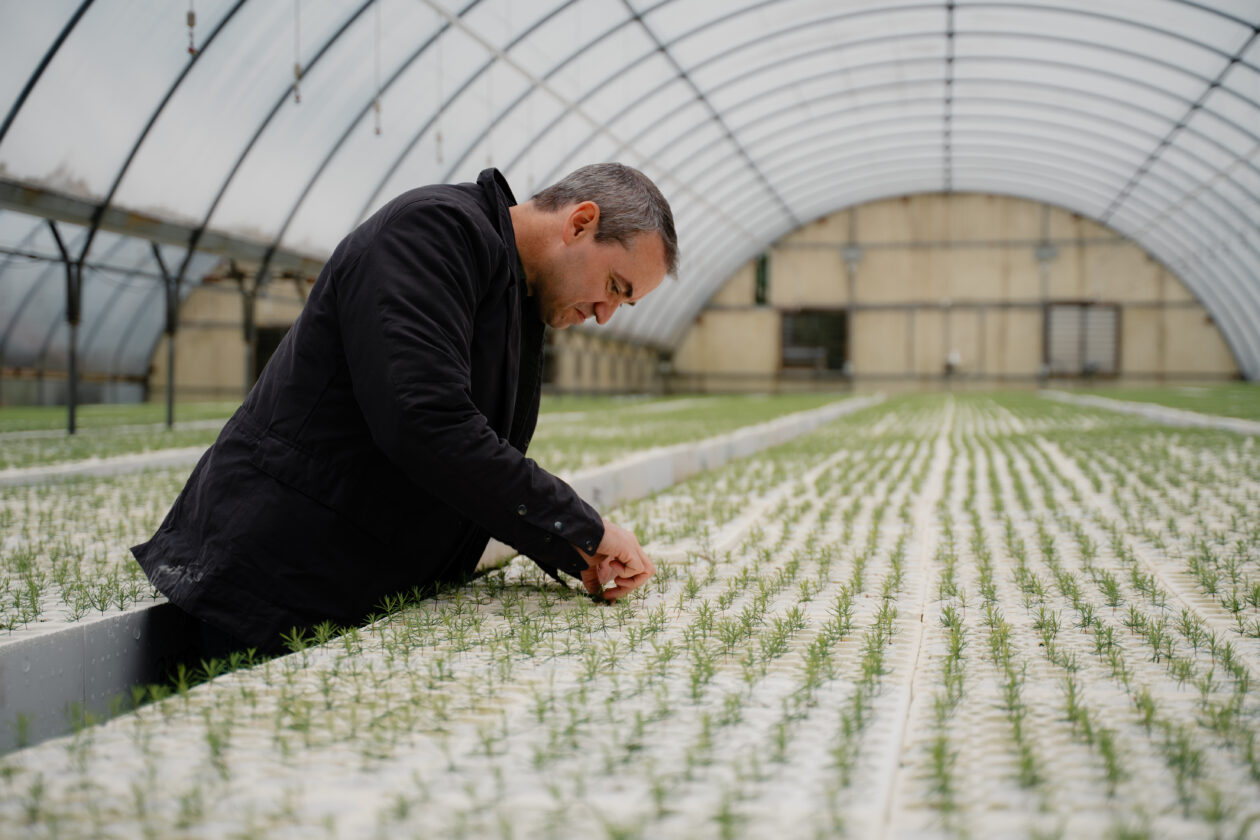
The Seattle startup began as DroneSeed, which mapped forests devastated by fires, then flew large drones to re-tree the landscape. It went on to purchase three companies that collect and cultivate conifer seeds and grow saplings for planting, and rebranded as Mast Reforestation.
The company recently shifted again, adding a new line of operations: taking scorched timber and burying it in clay-lined vaults where it won’t rot and release carbon. Biomass burial clears the woody debris — the most expensive step in forest restoration post wildfire — while also generating essential revenue by selling carbon credits. Proceeds from the sales help landowners “get their forest back,” Canary said, which benefits everyone.
Just as Canary has pursued unexpected paths to forest restoration, the sustainability leader also has unconventional solutions and sources of inspiration for tackling climate change. Keep reading to learn more. His quotes have been edited for clarity and length.
When did you realize you had to work in sustainability?
High school. I had a really fantastic teacher my senior year, and they got me focused on my philosophical underpinnings. I’m a utilitarian — greatest good for the greatest number of people, is how I would define that — and so my worldview formed around that time. And climate change is the problem that all other problems report to.
What’s your biggest worry when it comes to solving climate change?
Humans aren’t great at long-term projection. We’re much more responsive to short-term, and I am concerned that by the time that it is short-term, which is now, that there is not enough political will to understand the implications of climate change and how that affects all of the issues.
What gives you the most hope for the planet?
When I founded what would become Mast, there were not the technologies to replace the [fossil fuel] incumbents. That was 2016. The state of EVs versus internal combustion engine cars was not there yet. It’s getting there quickly. Solar was not necessarily the cheapest. Battery was still not there. Geothermal, we didn’t have that. Now we continue to have more and more of those tools to replace the incumbents. And by the way, the “incumbents” is the corporation, not the people working for those companies.
I very much want all of the better products and technologies. Yes, they’re sustainable, but they’re also just better. I want to brain drain all of the oil and gas companies and put them to work in geothermal.
If you could invent one sustainability solution overnight, what would it be?
In “Ready Player Two” [a sequel to “Ready Player One,” which Steven Spielberg turned into a movie], there is a technology that allows you to step into other humans’ lived experience and feel — and not just in video form, but in the smells, in the emotions, in the feelings, and basically live out other people’s lived experience.
That ability to make empathy mass scale would be a massive game changer in humans having more empathy for each other and understanding the challenges and problems that others are dealing with globally. That would be the technology that would advance things significantly.
What’s one habit you’ve changed personally because of environmental concerns?
My personal infrastructure. I’m lucky enough to have bought a house a few years ago and upgraded to a heat pump; Span [electrical] panels, which sets us up for vehicle-to-grid, solar, batteries, other things; an EV; and then less glamorous but equally important: insulation, both in the siding and in the windows and blinds. I’m sort of on my journey. We already have an electric cooktop, it’s not the amazing kind, and we have gas hot water heaters, so those are next up — and solar and batteries.
Coffee with any sustainability leader, past or present — who do you pick?
I would change the question and say, who would I want to work for? There’s a ton to learn from someone by working for them, and I think my answer then is [New York City Mayor Zohran] Mamdani. Not a sustainability leader by default, but he has accomplished and built a political backing to do big things that are ambitious, and from a sustainability lens, I would want to learn from that.
In the climate space, when we got started, the problem was [a need for more sustainable] tools. It has moved down the supply chain into execution, it’s go-to-market, and that means political will.
What’s the most overhyped climate solution right now?
AI. I use it. I enjoy it. I think it’s fun. But to say that it will solve the challenges of climate in the future are complete red herrings. AI is available to both sides. It is equally as effective at making gas extraction, oil extraction cheaper, faster, etc. as it is helping sustainable technologies get off the ground, and so I would say it is a neutral technology at best.
What’s an underrated solution that deserves more attention?
Nature as infrastructure. If people can’t get themselves to the place where they value forests for their aesthetics, for the health, for the community, for all of the other things, fine. Look at it on a spreadsheet and tell me how much it’s going to cost to replace several hundred thousand acres of forest with water treatment plants, water chiller plants, water purification plants, because that’s going to be a lot of tax dollars. And if we just let it burn, if we clear-cut it all to oblivion, that means that the city of Seattle’s water supply is not going to be as cold. It’s going to require a hell of a lot more purification, and there’s not going to be as much of it.
What impact do you hope your work has in 20 years?
My hope is that we’ve established the funding source for reforestation with a carbon market. The carbon market is what pulls nature as infrastructure into a valued asset. It’s not an esoteric nice-to-have from a philosophical perspective, it is a valued asset that puts it into the human system of economics in a much bigger way. A carbon market is as big an evolutionary step for humanity as the printing press, as banking, as generally accepted accounting principles.